Remember mornings when, before you fully opened your eyes, your hand was already reaching for your phone? It’s almost automatic, like breathing. A few notifications, a headline, someone’s new work that is brighter and bolder than yours, a reminder about an email you haven’t answered.
By the time your feet touch the floor, you’ve already let a dozen voices into the room, and not one of them is your own.
Information is not the same as guidance. Input is not the same as insight.
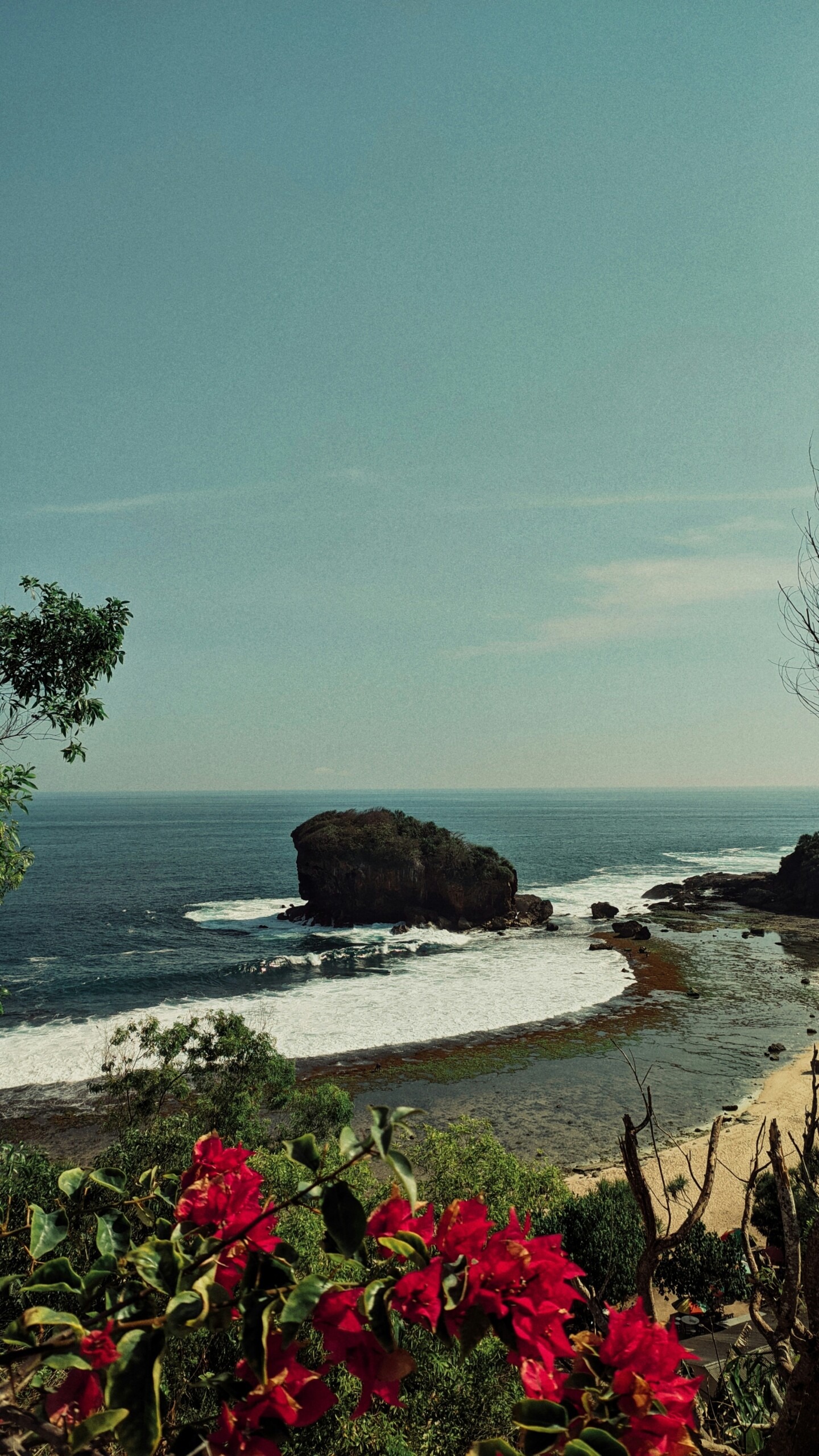
I’ve been thinking a lot lately about how this happens. We never deliberately decide to drift away from our inner guidance. Nobody wakes up and says, “Today I’ll stop listening to myself.” It’s quieter and more subtle than that. It happens like a distraction at the right time, like the tide coming in. You look up from your creative work, and suddenly the shore you were standing on is far away, and all this water is between you and where you started.
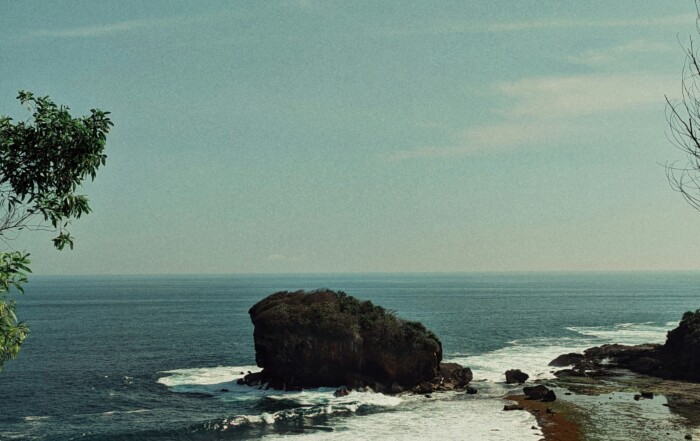
That’s the image that keeps coming back to me: an ocean. Not a wall, because a wall is something we build on purpose and could tear down. An ocean is made of countless tiny drops. Each scroll, each comparison, each “just one more video,” each opinion we absorb without noticing. None of them feels significant alone. Together, they become vast.
Where the inner voice goes
As an artist, my work depends on deep listening. A voice (some call it inner knowing, some call it the muse; I call it intuition) tells me when a piece is finished and when to scrape the whole canvas back and start over. It doesn’t shout. It never has. It speaks in nudges and small certainties, in the pull toward one brush over another, one note after the other.
And here’s what I’ve learned the hard way: that voice doesn’t compete. It won’t raise its volume to be heard over the noise. When the outer world gets loud, the inner guidance doesn’t argue; it simply waits on the far shore, patient, while you get lost in the waves.
I notice it most in my studio: On days I start by consuming, whether that’s other people’s art, opinions, or success, my hands feel hesitant. I start making work that I think should exist rather than work that wants to exist.
The distractions that don’t look like distractions
The obvious culprits are easy to name: the phone, the endless feed, the media, the background noise (and excuses) we keep running so we never have to sit in silence. But some of the widest stretches of water come from things that look productive or even virtuous. Thinking endlessly about “the right way” to do something instead of trying it. Asking five friends for their opinion before asking myself. Staying so busy with deadlines that I never have an empty hour for play. Studying trends so closely that I forget what I was curious about before I knew what was popular.
None of these things are bad on their own. Learning, community, and hard work all matter. But when they fill every quiet space, they become the ocean too.
Rowing back
The good news, and I truly believe this, is that the shore never disappears. The inner voice doesn’t leave us; it just drifts. And drifting can be reversed.
For me, the way back is almost embarrassingly simple, though not always easy. I start the day with something that asks nothing of me: a cup of tea by the window, ten minutes of loose writing that no one will ever see, a walk with my dog without headphones. I leave my phone in another room while I work. I am mindful of when I reach for outside approval and gently ask myself instead: what do I think?
Silence feels uncomfortable at first. When you’ve been surrounded by noise for a long time, quiet can feel empty, even a little frightening. But if you stay with it, something begins to surface. A memory, an image, a color you can’t stop thinking about. A small, clear sense of what matters. That’s the far shore coming back into view.
Each moment of real attention is like a stroke of the oars. Not dramatic, not instant, but steady. And slowly the ocean narrows.
An invitation
I don’t think the answer is to throw away our phones or retreat to a cabin in the woods (though I won’t pretend I haven’t fantasized about it). The world will always be full of voices, and many of them are beautiful and worth hearing. The practice is to remember that there’s one voice that belongs to you, and that it deserves the first word, not the last.
So I’ll leave you with a question I’ve been asking myself:
What have you let in today that stands between you and yourself? And what would happen if, just for an hour, you let the water go still?
You might be surprised how close the shore really is.